A Royal Flush · Northeast Portable Restroom Experts
How Much Does a Porta Potty Rental Cost? Breaking Down Every Factor
How much does a porta potty rental cost comes down to five things: unit type, rental length, service frequency, delivery distance, and the time of year. The interaction between those five variables is what produces the real number on a quote, and understanding each one separately makes it easier to control the total. A Royal Flush has been quoting construction and event rentals across Connecticut, New York, New Jersey, and the broader Northeast for over 30 years. The ranges below reflect what jobs in this market actually cost in 2026.
Porta potty rental price: the 2026 baseline by duration
Rental length moves the per-day price more than any other single variable. A unit rented for one day costs significantly more per day than the same unit rented for a month. The table below breaks down porta potty rental price across the three main unit types and three common rental durations for Northeast markets.
Standard
Deluxe flushing
Restroom trailer
Northeast estimates for CT, NY, and NJ markets. Monthly construction rates include weekly servicing. Trailer rates vary by stall count and site access. Monthly rates look lower because the setup and pickup cost amortizes over a longer period and most monthly plans include scheduled servicing in the base rate. For a full breakdown of pricing by unit type, see our full unit-type pricing guide. Day rates apply almost exclusively to event rentals. Construction sites almost always run on weekly or monthly plans. The economics favor monthly for any rental that will extend past two weeks.
Factor 1: Unit type
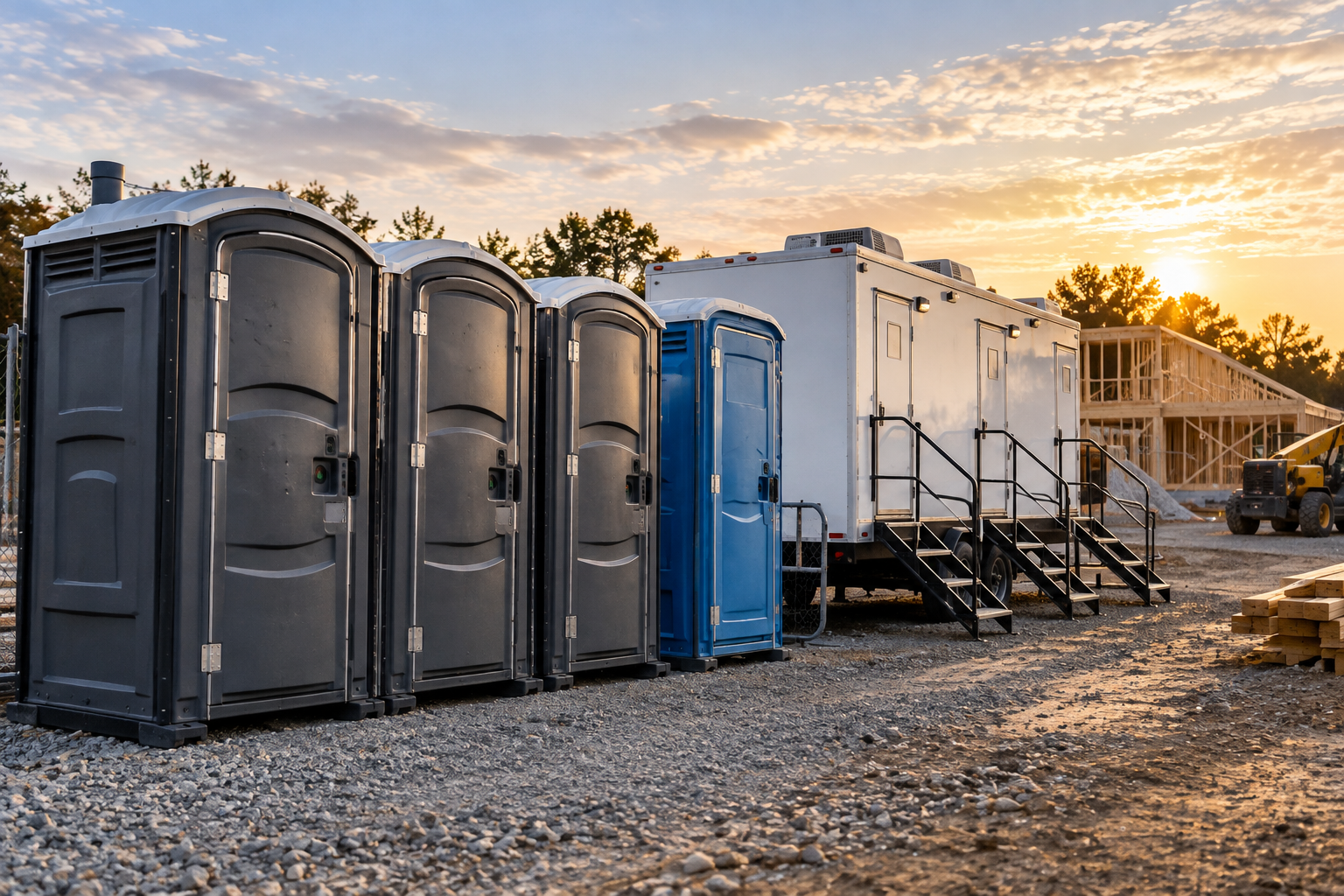
The unit type sets the floor of what the rental can cost. A standard non-flushing unit is the baseline. Moving to a deluxe flushing unit with a sink and mirror adds $100 to $250 per week in Northeast markets. Moving from a deluxe unit to a restroom trailer adds $300 to $4,400 or more per week depending on stall count. For construction sites and large-volume event rentals, the cost difference between tiers compounds quickly. Ten standard units at $200/week is $2,000/week. Ten deluxe units at $400/week is $4,000/week. The tier decision is not just a per-unit question. For a detailed comparison of what each tier delivers in features, hygiene, and guest experience, see our guide on standard vs. luxury portable restrooms.
Factor 2: Porta potty cost per day vs. weekly vs. monthly
Porta potty cost per day in Northeast markets runs $75 to $200 for a standard unit. That rate is standard for event rentals, where the provider delivers, sets up, and retrieves the unit within a tight window. The labor cost is the same whether the unit sits on site for 4 hours or 24 hours, which is why day rates are high relative to the unit's base value. Weekly rates run $100 to $350 for a standard unit and make sense for short construction projects, multi-day festivals, or situations where the rental window is certain but shorter than a month. The per-day cost of a weekly rental is roughly half the day rate. Monthly rates run $100 to $300 for a standard unit with weekly servicing included. For construction sites that will run 30 days or more, the monthly plan is the right structure. The per-day cost of a monthly rental is roughly one-fifth to one-quarter of the day rate on the same unit. Any rental that extends past two weeks should be quoted on a monthly basis.
Factor 3: Service frequency
Service frequency is the cost variable most renters underestimate at the planning stage. The base rental rate covers the unit. The service plan covers keeping it usable, which is a separate cost driver. Most monthly construction plans include one service visit per week in the base rate. Each additional visit costs $75 to $150 per trip in Connecticut, New York, and New Jersey markets. Moving a 20-worker site from weekly to twice-weekly service adds $300 to $600 per month to the total, on top of the base unit rental. For events, the base quote typically includes one pre-event service call. For events running longer than 6 hours with 100 or more guests, a mid-event service visit is worth budgeting. An overflowing or unclean unit during a peak event period creates a guest experience problem that no other factor can offset. From a compliance standpoint, an unserviced unit does not count toward the OSHA minimum on construction sites regardless of its physical presence on site. For guidance on sizing both unit count and service frequency together, see our unit count and servicing guide. Unsure how to structure the service schedule for your site or event? A Royal Flush has built servicing plans for construction crews and event organizers across Connecticut, New York, and New Jersey for over 30 years. Request a free estimate and we'll size the plan for your specific situation.
Factor 4: Delivery distance and site access
Delivery is charged as a flat fee based on distance from the service depot. For standard sites in Connecticut and New Jersey, the delivery fee runs $50 to $100 per trip. That covers both delivery and pickup at the end of the rental. Urban density adds a surcharge in New York metro and dense Connecticut markets. Route complexity, permit requirements for street placement, and loading dock logistics all add time and cost that the standard delivery rate does not cover. Sites with restricted vehicle access, narrow entry gates, or high-rise placement typically carry a delivery premium of $100 to $300 above the standard fee. Crane placement for high-rise construction sites is quoted separately and depends on building height, crane availability, and the number of floors being served. For most suburban and semi-urban Northeast job sites, delivery is a minor line item. For complex placements in dense urban markets, it is worth getting an itemized quote upfront.
Factor 5: Seasonal demand in the Northeast
Peak season in Connecticut, New York, and New Jersey runs April through October. Wedding season, outdoor event season, and construction season overlap almost entirely during those months. Unit availability tightens in June, July, and August, and pricing at the top of published ranges is more common during this window. Off-season rentals from November through March typically price at the lower end of ranges. Construction sites that keep running through winter benefit from seasonal pricing, though winter operations add a cost that summer rentals do not: antifreeze treatment. Any unit operating when temperatures drop below freezing in the Bridgeport and greater Connecticut market needs antifreeze treatment to remain functional. Without it, the tank contents freeze, the unit fails, and it stops counting toward OSHA compliance. Antifreeze treatment adds $10 to $20 per unit per billing cycle as a standard winter add-on. For year-round construction sites, it is a routine line item rather than a surprise. Booking 4 to 6 weeks ahead during peak summer months is strongly recommended. Last-minute orders in peak season either pay a premium for expedited delivery or risk unit unavailability on the required date.
Porta potty rental cost per month: what construction sites actually pay
Porta potty rental cost per month on a construction site is the most predictable of all the pricing structures. The all-in cost for a standard unit with weekly servicing in Northeast markets runs $100 to $300 per unit. Most construction sites run multiple units under a single monthly plan. A 10-worker site running one unit at $200/month pays roughly $2,400/year for full OSHA-compliant sanitation. A 50-worker site running two units at $200/unit pays $400/month. A 100-worker site running three units pays $600/month. These figures assume weekly servicing is included, which it is in most standard monthly plans from A Royal Flush. The cost of non-compliance for comparison: a willful OSHA violation for inadequate sanitation facilities can reach $165,514 per citation. The monthly plan cost is a rounding error by comparison. For the full breakdown of OSHA requirements by crew size, crane unit specifications for high-rise sites, and winter servicing protocols, see our full construction site guide.
Frequently asked questions
How much does a porta potty rental cost?
Standard units in the Northeast run $100 to $350/week, $75 to $200/day for events, and $100 to $300/month for construction with weekly servicing included. Deluxe flushing units and restroom trailers run higher. The exact number depends on unit type, rental length, service frequency, delivery distance, and season.
How much does it cost for a porta potty rental?
Cost varies by unit type, rental length, and service plan. Standard weekly rentals run $100 to $350 in CT, NY, and NJ. Deluxe flushing units run $200 to $600 per week. Restroom trailers are quote-based starting from $300 per day for smaller models. Monthly construction plans with servicing typically run $100 to $300 per unit.
What is the porta potty rental price for a one-day event?
Day rates for a standard unit run $75 to $200 in Northeast markets. Deluxe flushing units run $125 to $300 per day. Day rates are higher per-day than weekly or monthly rates because setup and pickup labor is the same regardless of how long the unit sits on site.
What drives porta potty rental cost up the most?
Service frequency is the largest variable on long-term rentals. Moving from weekly to twice-weekly service can add $300 to $600 per month to the total cost on the same number of units. Unit type is the largest variable on short-term event rentals. Delivery distance and site access complexity are the third largest driver, particularly on urban or restricted-access sites in the New York metro area.
Get pricing based on your actual site or event. Every factor that moves the price up or down is something A Royal Flush quotes against directly when building a plan. Thirty years of construction and event rentals across Connecticut, New York, and New Jersey means the estimate reflects what the job actually costs, not a national average. Get a free estimate, or revisit our unit-type pricing guide to compare options side by side.