The gap between a standard porta potty and a luxury portable restroom trailer is wider than most people expect. So is the price. For event planners and site managers in the Northeast, the choice rarely comes down to just two options: there is a middle tier, the deluxe flushing unit, that fits a large range of events that standard units underserve and restroom trailers overserve.
A Royal Flush carries all three tiers across Connecticut, New York, New Jersey, and the broader Northeast, with a fleet that includes 10,000 portable units and 80 restroom trailers ranging from 8 to 28 feet. Knowing which tier is right comes down to four things: event tone, duration, guest count, and site access.
The three tiers of portable restrooms: a side-by-side comparison
Most events do not come down to a binary standard-vs-luxury choice. The deluxe flushing unit sits between the two and covers a range of occasions where standard units feel insufficient but a full restroom trailer exceeds the budget or the venue constraints.
| Feature |
Standard |
Deluxe flushing |
Restroom trailer |
| Flush toilet |
No |
Foot-pump flush |
Porcelain flush |
| Running water |
No |
Sink with mirror |
Hot and cold, vanity |
| Climate control |
No |
Improved ventilation |
Full A/C and heat |
| Interior space |
~45 sq ft |
~60 sq ft |
Multiple stalls, spacious |
| Weekly cost (Northeast) |
$100-$350 |
$200-$600 |
$300-$5,000+ |
| Best for |
Construction, large festivals |
Corporate, graduations, VIP sections |
Weddings, galas, film/TV |
2026 feature comparison for Northeast event and construction rentals. Trailer pricing varies by stall count and event duration.
All three tiers are available in our full portable restrooms fleet. The right tier for your event depends less on how many guests you have and more on what those guests will expect when they walk through the door.
The sharpest perceptual gap in the table above is between standard and deluxe: the move from hand sanitizer to a running water sink with a mirror shifts how guests experience the restroom entirely. The move from deluxe to a full trailer adds climate control and private stall separation, which matters at formal events but adds less to the experience at casual ones.
When standard portable restrooms are the right call
Not every event needs a luxury porta potty rental. Standard units are the right choice for a specific set of circumstances, and recommending an upgrade when the event does not call for it wastes budget that could go toward guest experience in other ways.
Standard portable restrooms work best for construction sites, charity runs, community street fairs, large outdoor festivals where unit count matters more than unit quality, and any event running under 3 hours. At an all-day festival in New Jersey with 800 attendees, 16 standard units placed across the venue will serve guests better than 4 restroom trailers clustered in one area.
Standard units also make sense when turnaround time is short. They are widely available across Connecticut and New York, can typically be delivered within 24 to 48 hours, and can be ordered in large quantities without advance planning. For a last-minute event addition or a job site that spins up quickly, standard is the practical answer.
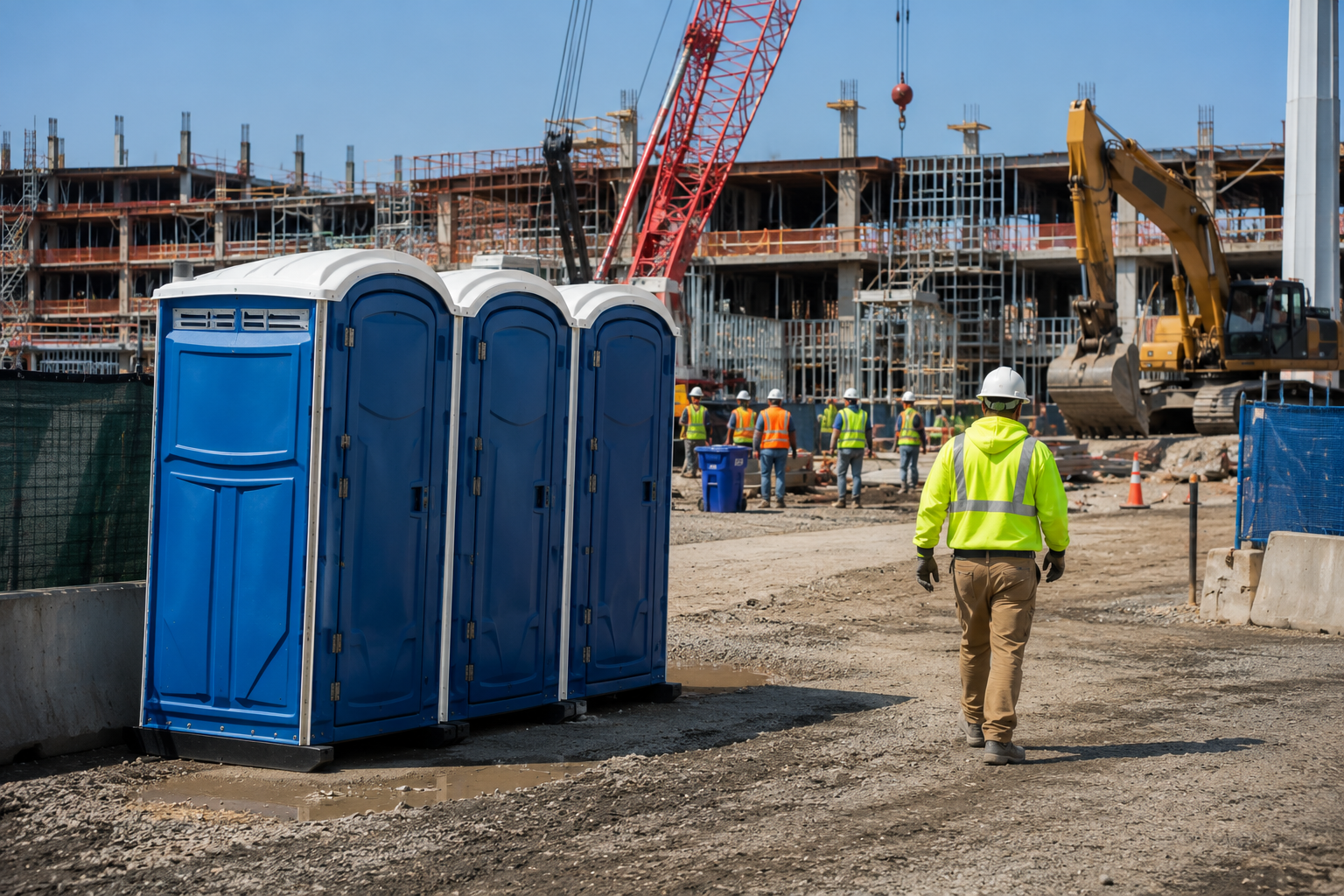
For construction site use in particular, standard units are the clear choice. They are rugged, service-friendly, and built for daily heavy use. See our construction site rentals for crew-size configurations and OSHA-compliant servicing plans.
When to upgrade to a deluxe porta potty
The deluxe porta potty is the most underused tier in event planning. It costs 30 to 80% more than a standard unit but delivers a perceptually significant upgrade: a foot-pump or pedal flush mechanism, a running water sink, an interior mirror, improved interior lighting, and better ventilation. For guests attending a corporate day or outdoor graduation, that difference is immediately noticeable.
Deluxe units are the right call for corporate events and company picnics, outdoor graduations and academic ceremonies, upscale fundraisers and galas where a full restroom trailer is not in the budget, VIP sections at large festivals where premium ticket holders have a separate restroom area, and multi-day events where standard units become increasingly uncomfortable by day two.
A deluxe unit running $200 to $600 per week in Northeast markets hits the right balance for a Bridgeport or Connecticut corporate event that wants to convey professional attention to detail without committing to the logistics and cost of a full trailer rental.
For outdoor events that call for the deluxe tier, our outdoor event portable restroom rentals include deluxe and standard units alongside ADA-accessible options and hand washing stations.
Not sure which tier fits your event? A Royal Flush serves events of every size across Connecticut, New York, and New Jersey. Request a free estimate and we’ll recommend the right unit for your guest count, budget, and venue.
Luxury restroom trailer rental: when the upgrade pays off
A luxury restroom trailer rental is in a different category from either standard or deluxe units. Step inside one of ARF’s trailers and you find porcelain flush toilets, running hot and cold water at vanity sinks, climate control, hardwood-style flooring, full-length mirrors, and ambient lighting. Larger trailers include separate entrances for men and women, multiple private stalls, and sound systems.
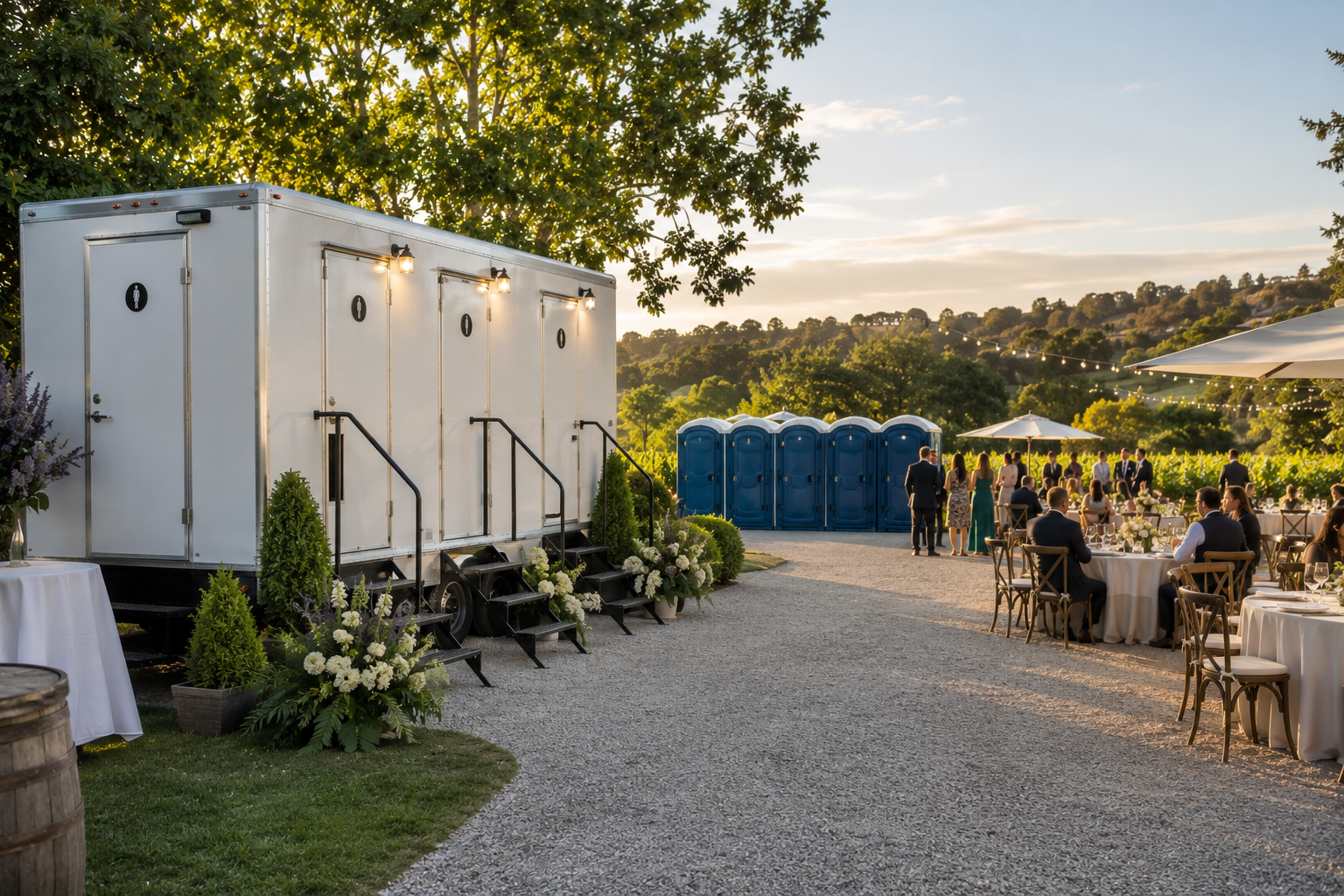
The trailer is the right choice when the event itself has a formal or elevated tone and the restroom should not be the jarring exception to that tone. An outdoor wedding in New York with 150 guests in formal attire, a black-tie fundraiser at a Connecticut vineyard, a VIP corporate retreat in New Jersey: each of these calls for a restroom experience that stays consistent with the event’s standard. A standard porta potty at any of these events becomes a talking point for the wrong reason.
A Royal Flush’s trailer fleet runs from 8-foot two-stall units that accommodate 50 guests up to 28-foot configurations for 250 guests. The same fleet that has served the NYC Marathon for 22 consecutive years is available for private events across the region.
Browse our full range of luxury restroom trailer rentals, or see our dedicated wedding restroom trailer rentals page for wedding-specific sizing and package options.
How much do luxury portable restrooms cost? A Northeast pricing guide
Pricing across the three tiers follows a consistent pattern in Connecticut, New York, and New Jersey markets. The table below uses 2026 Northeast estimates.
| Unit type |
Weekly range (Northeast) |
Best event match |
| Standard |
$100-$350 |
Construction, large festivals, short outdoor events |
| Deluxe flushing |
$200-$600 |
Corporate events, graduations, VIP sections, multi-day |
| Restroom trailer |
$300-$5,000+ (quote-based) |
Weddings, galas, film/TV, black-tie fundraisers |
Northeast pricing estimates for 2026. Trailer rates vary by stall count, duration, and site access. Contact A Royal Flush for a site-specific quote.
To put trailer pricing in budget context: for a $30,000 outdoor wedding in Connecticut, upgrading from standard units to a restroom trailer typically represents 3 to 5% of total event spend. For most couples who have already committed to the venue, catering, and photography, that percentage translates to a restroom experience that guests actually comment on positively.
The cost difference between standard and deluxe is smaller and often more defensible for mid-range events. A corporate day with 200 attendees that moves from standard to deluxe units adds roughly $300 to $600 to the sanitation line item while materially improving the employee experience.
Four questions to pick the right tier
What is the event tone? Casual events, work sites, and large public gatherings fit standard units. Professional or semi-formal events warrant deluxe. Formal, elegant, or VIP events call for a restroom trailer.
How long does the event run? Under 3 hours, standard units are adequate for most crowd sizes. Events running 4 to 8 hours benefit from deluxe as a minimum; guests who use the restroom multiple times during a long event notice the difference in comfort. Multi-day events should use deluxe or trailer to maintain hygiene standards across days.
What share of total event budget is the sanitation line? For events where restrooms represent less than 3% of total spend, upgrading one tier is rarely a budget issue. For events where cost is genuinely constrained, more standard units at better placement beats fewer luxury units in the wrong location.
Does the venue allow trailer access and utility hookup? Restroom trailers require level ground, a clear delivery path for the tow vehicle, and ideally access to water and power. Off-grid venues, rooftop locations, or sites with tight vehicle access may make a trailer impractical regardless of budget. Deluxe standalone units work anywhere standard units do.
Frequently asked questions
How much do luxury portable restrooms cost?
Deluxe flushing units in the Northeast run $200 to $600 per week. Restroom trailers start around $300 to $500 per day for smaller 2-stall models and scale up based on trailer size, stall count, and event duration. Contact A Royal Flush for a site-specific quote.
What is a luxury portable restroom?
A luxury portable restroom is a standalone unit or trailer with flush toilets, running water, interior lighting, and climate control. Deluxe flushing units are a mid-tier option with a sink and flush mechanism. Restroom trailers are the premium tier, with features comparable to indoor facilities including separate men’s and women’s sections.
Are luxury portable restrooms worth it for a wedding?
For most outdoor weddings with 75 or more guests, a restroom trailer is worth the upgrade. The cost typically represents 3 to 5% of total wedding spend while producing a guest experience that matches the formality of the occasion. Standard units at a wedding reception are functional but frequently become a negative talking point.
Do you provide attendants for luxury portable restroom trailers?
Attendant service is available for larger events and is strongly recommended for weddings and VIP functions with 100 or more guests. An attendant keeps the trailer stocked, clean, and operational throughout the event, removing the need for the event host to monitor restroom supplies during the occasion.
The right unit comes down to three things: event tone, guest count, and how long they’ll be there. A Royal Flush carries all three tiers across Connecticut, New York, New Jersey, and the broader Northeast. See our restroom trailers, or get a free estimate and we’ll match the right unit to your event.